
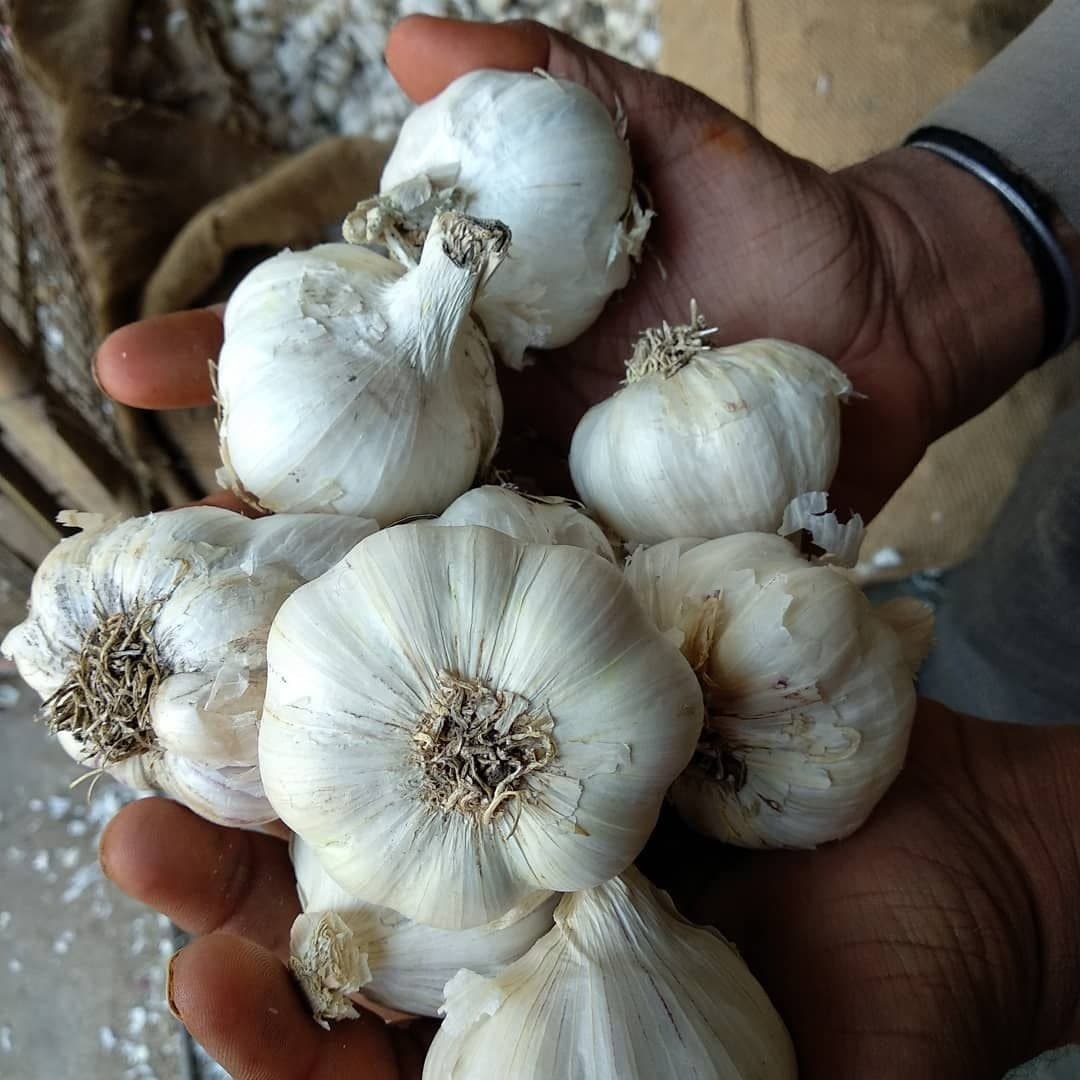
Ooty garlic (Nilgiri garlic) isn't just another variety—it's India's premium hill-station garlic with GI (Geographical Indication) tag recognition. While conventional wisdom says avoid garlic during monsoon, smart farmers are successfully growing this high-value variety using specialized techniques that turn rainy season challenges into profitable opportunities.
Why Ooty Garlic Commands Premium Prices
Ooty garlic stands apart from regular varieties with unique characteristics that justify its ₹400-600 per kg market price:
Premium Quality Features:
- Larger cloves: 4-5 times bigger than local varieties [6][11]
- Pure white color: Perfect for export and premium retail markets [30]
- Higher pungency: Rich in organosulfur compounds and allicin [29][31]
- Extended shelf life: 8-10 months storage capacity vs 4-6 months for regular garlic [6]
- Medicinal properties: Higher antioxidant and antimicrobial compounds [29][31]
Market Advantages:
- Double yield potential: 40-60 quintals per acre vs 20-25 quintals for local varieties [6]
- Export demand: Growing international market for dehydrated Ooty garlic [11]
- GI tag benefit: Kodaikanal hills garlic enjoys protected geographical status [33]
- Premium pricing: Consistently commands 300-400% higher prices than regular garlic [11]
बरसात में ऊटी लहसुन की खेती: क्या संभव है? (Is Monsoon Cultivation Possible?)
Traditional approach says NO – but modern farming techniques prove it's absolutely possible with proper methods [9][12].
Why Conventional Garlic Fails in Monsoon:
- Waterlogging sensitivity: Garlic roots rot in standing water [5][20]
- Fungal diseases: Wet rot, white rot, and purple blotch increase dramatically [20][25]
- Poor bulb formation: Excess moisture leads to small, deformed bulbs [5]
- Premature sprouting: High humidity causes early germination [17]
Success Strategy for Monsoon Ooty Garlic:
The key is not avoiding water—it's managing drainage and timing perfectly [19][24].
Proven Techniques for Monsoon Ooty Garlic Cultivation
1. Raised Bed System (Essential for Success)
Raised beds are non-negotiable for monsoon garlic cultivation [19][24]:
Optimal Bed Specifications:
- Height: 4-6 inches minimum (up to 12 inches in heavy rainfall areas) [24]
- Width: 4 feet for easy management [19]
- Length: As per field layout
- Drainage channels: 1 foot wide between beds [14]
Bed Preparation Steps:
- Deep plowing (8-10 inches) before monsoon
- Add 2-3 inch layer of coarse sand/gravel at bottom
- Mix 20-25 tons FYM + 250kg neem cake per hectare
- Create raised beds 4-6 inches high
- Install drainage channels every 4 feet
2. Strategic Timing (Critical Success Factor)
Timing is everything in monsoon Ooty garlic cultivation [9][12]:
Recommended Planting Schedule:
- Late August: Best time after heavy monsoon recedes [9]
- Early September: Ideal for most regions [10]
- Latest: September last week (before October) [9]
- Avoid: July-early August (peak monsoon period) [12]
Climate Requirements:
- Temperature: 15-25°C ideal for Ooty garlic [6]
- Humidity: Moderate (not excessive) [27]
- Rainfall: Light, intermittent preferred over heavy continuous [8]
3. Advanced Drainage Management
Perfect drainage = Success guaranteed [20][23]:
Multi-Layer Drainage System:
- Top Layer: Well-composted FYM + sand mix
- Middle Layer: Coarse river sand (2 inches)
- Bottom Layer: Gravel/broken stones (2 inches)
- Base: Sloped naturally for water runoff
Water Management Protocol:
- Never allow standing water for more than 2 hours [20]
- Gentle irrigation: Drip or sprinkler preferred [23]
- Mulching: 2-3 inch organic mulch layer [19]
- Monitoring: Daily drainage inspection during heavy rains [20]
4. Variety Selection & Seed Treatment
Best Ooty Garlic Varieties for Monsoon:
- Ooty-1: Released variety, 120-130 days, thrips resistant [30]
- Yamuna Safed-4: Highest yield potential (11+ tons/hectare) [33]
- Local Kodaikanal types: Well-adapted to hill conditions [33]
Pre-Planting Seed Treatment:
बीज उपचार विधि:
- ट्राइकोडर्मा विरिडी: 10 ग्राम प्रति किलो बीज
- कार्बेंडाजिम: 2.5 ग्राम प्रति किलो
- पंचगव्य घोल में 1 घंटा भिगोना
- छाया में सुखाकर तुरंत बुआई करें
Step-by-Step Monsoon Cultivation Guide
Phase 1: Field Preparation (July-August)
Land Preparation:
- Deep summer plowing: Break hardpan layer [14]
- Organic matter addition: 25 tons FYM + 5 tons vermicompost per hectare [14]
- Raised bed construction: Using tractor-drawn bed former or manual shaping [24]
- Drainage system: Install field drains and water outlets [20]
Phase 2: Planting (Late August-September)
Optimal Planting Method:
- Depth: 3-4 cm (shallower than normal season) [10]
- Spacing: 10cm x 15cm for premium bulb size [8][14]
- Orientation: Pointed end upward [10]
- Seed rate: 200-240 kg per hectare for Ooty varieties [14]
बुआई की सही विधि:
- गहराई: 3-4 सेमी (सामान्य से कम गहरी)
- दूरी: कतार से कतार 15 सेमी, पौधे से पौधे 10 सेमी
- दिशा: नुकीला भाग ऊपर की तरफ रखें
- समय: दोपहर बाद की छाया में बुआई करें
Phase 3: Crop Management (September-December)
Irrigation Schedule:
- First 30 days: Every 3-4 days light watering [8]
- 30-60 days: Weekly irrigation [18]
- 60-90 days: Bi-weekly watering [15]
- Final month: Reduce irrigation for bulb maturation [18]
Nutritional Management:
Monsoon-Specific Fertilizer Program:
- NPK 19:19:19: 1 kg per acre monthly
- Calcium Nitrate: 5 kg per acre (prevents tip burn)
- Micronutrients: Zinc, Boron spray fortnightly
- Organic boost: Vermicompost tea weekly
Phase 4: Disease & Pest Management
Common Monsoon Challenges:
- Wet rot disease: Most serious threat [20]
- Purple blotch: Fungal infection in humid conditions [11]
- Thrips: Less problematic in Ooty varieties [15][30]
- White rot: Soil-borne fungal disease [21]
Integrated Management Strategy:
रोग नियंत्रण कार्यक्रम:
- निवारक छिड़काव: डाइथेन M-45 (2 ग्राम/लीटर)
- जैविक नियंत्रण: ट्राइकोडर्मा स्प्रे
- कॉपर ऑक्सीक्लोराइड: गीले मौसम में साप्ताहिक
- उचित वायु संचार: घनी बुआई से बचें
Expected Economics & Returns
Investment Analysis (Per Hectare):
Initial Investment:
- Quality seed: ₹40,000-50,000
- Raised bed construction: ₹15,000-20,000
- Organic manures: ₹25,000-30,000
- Plant protection: ₹10,000-15,000
- Labor & miscellaneous: ₹20,000-25,000
Total Investment: ₹1,10,000-1,40,000
Revenue Projections:
- Conservative Yield: 40 quintals/hectare
- Premium Market Price: ₹400-600/kg
- Gross Revenue: ₹16,00,000-24,00,000
- Net Profit: ₹14,50,000-22,50,000
- ROI: 1300-1600% (Exceptional returns!)
Risk Mitigation:
- Crop insurance: Available for garlic cultivation [21]
- Contract farming: Pre-agreed prices with exporters [11]
- Value addition: Dehydrated garlic processing [11]
- Storage facilities: Extended shelf life advantage [6]
Success Stories & Expert Tips
Farmer Success Story:
"Started with 0.5 hectares of monsoon Ooty garlic using raised beds. First year yield: 45 quintals. Sold at ₹450/kg to export companies. Net profit: ₹8.5 lakhs from half hectare!" — Krishna Farmer, Kodaikanal [11]
Expert Recommendations:
- Avoid onion proximity: Reduces thrips infestation significantly [15]
- Organic certification: Premium for certified organic Ooty garlic [23]
- Processing linkages: Connect with dehydration units for guaranteed sales [11]
- Weather monitoring: Use mobile apps for rainfall predictions [9]
Common Mistakes to Avoid
Fatal Errors in Monsoon Cultivation:
- Planting too early: July-August planting leads to crop failure [9][12]
- Inadequate drainage: Single biggest cause of crop loss [20]
- Over-irrigation: More water ≠ better growth [5]
- Poor seed quality: Using regular garlic instead of certified Ooty varieties [6]
- Ignoring disease prevention: Waiting for symptoms instead of preventive sprays [20]
Success Habits:
- Daily field monitoring during peak monsoon [20]
- Preventive spray schedule regardless of visible disease [25]
- Proper documentation of weather and crop response [21]
- Market linkage established before planting [11]
FAQ - बरसात में ऊटी लहसुन की खेती
Q1. क्या बरसात में ऊटी लहसुन लगाना सुरक्षित है?
A. हां, उचित ड्रेनेज और रेज्ड बेड तकनीक के साथ बिल्कुल सुरक्षित है। सितंबर के अंत में लगाना सबसे अच्छा है [9][12]।
Q2. ऊटी लहसुन और सामान्य लहसुन में क्या अंतर है?
A. ऊटी लहसुन में बड़े कलियां, अधिक तीखापन, सफेद रंग, और 8-10 महीने की शेल्फ लाइफ होती है। मार्केट रेट 3-4 गुना अधिक मिलता है [6][11]।
Q3. बारिश में कौन सी बीमारियों का खतरा सबसे ज्यादा है?
A. वेट रॉट (गीला सड़न) सबसे बड़ा खतरा है। उचित ड्रेनेज और निवारक स्प्रे से इससे बचा जा सकता है [20][25]।
Q4. एक एकड़ में कितनी लागत आएगी?
A. लगभग ₹45,000-55,000 प्रति एकड़ कुल लागत। मुनाफा ₹5-9 लाख प्रति एकड़ तक संभव [11]।
Q5. कहां बेचें ऊटी लहसुन?
A. एक्सपोर्ट कंपनियों, डिहाइड्रेशन यूनिट्स, प्रीमियम रिटेल चेन्स, और ऑनलाइन प्लेटफॉर्म पर अच्छे दाम मिलते हैं [11]।
The Bottom Line
Monsoon Ooty garlic cultivation is not just possible—it's highly profitable for farmers who master the techniques. With proper drainage, raised beds, timing, and disease management, you can achieve:
- Premium yields: 40-60 quintals per hectare [6][11]
- Exceptional prices: ₹400-600 per kg vs ₹80-120 for regular garlic [11]
- Extended harvest window: Less competition during off-season sales [9]
- Export opportunities: Growing international demand [11]
The key is treating monsoon as an opportunity, not a challenge. Smart farmers who adapt these proven techniques are already earning ₹10-20 lakhs per hectare from monsoon Ooty garlic cultivation.
Ready to Start Your Premium Ooty Garlic Journey?
Connect with RR Traders for:
- Certified Ooty garlic seeds from authenticated sources
- Technical guidance throughout the cultivation cycle
- Market linkages for premium price realization
- Processing connections for value-added sales
Contact: MandsaurMandiBhav.in | WhatsApp: +91-7869155751
Transform your farming with premium Ooty garlic cultivation – where traditional wisdom meets modern techniques for exceptional profits!
Sources
- PDF: GARLIC SOILS AND CLIMATE — Garlic can be grown at elevation of ...
- Garlic: Measures to control wet rot disease
- Vegetables:: Garlic - Natural Farming - Horticulture
- How to Protect Garlic Crop — Here are Tips - KhetiVyapar
- How to do garlic cultivation | Garlic farming - KhetiVyapar
- Garlic Farming In India
- ऊटी लहसुन का भाव और खेती: सही जानकारी से पाएं अधिक लाभ
- Guide to Setting Up a Garlic Farm in Maharashtra - Agritimes
- बरसात में लहसुन की खेती कैसे करें || Barsat Me Lahsun Ki Kheti Kaise ... (YouTube)
- Ooty Garlic Farming: Double Your Yield & Earn Higher Profits
- बरसात में लहसुन की खेती कैसे करे || lahsun ki kheti (YouTube)
- Growing Garlic in Mumbai
- लाखो रु की कमाई देने वाली है ऊटी लहसुन | How to cultivate Ooty Garlic (YouTube)
- How To Grow Garlic In Warm Climates And Tropical Regions (YouTube)
- Horticulture :: Vegetables :: Garlic - TNAU Agritech Portal
- Polyhouse Garlic Farming (Vellulli), Cultivation Practices
- Growing Garlic in Raised Beds - Practical Self Reliance
- PDF: Review on garlic cultivation in India — Techniques, challenges, and future prospects
- How to PLANT GARLIC in the Fall in RAISED BEDS (YouTube)
- Organic Garlic Farming: Tips and Tricks
- Why You Should Grow Garlic On Raised Beds
- Garlic Farming Business Plan: Cultivation and Production Guide for Beginners
- PDF: Performance Evaluation of Garlic Genotypes for Phenotypical and Yield Parameters under Nilgiris Condition
- A Brief Overview about the Health Benefit of Garlic and Study of Cultivation Environment Aspects
- Local Flavour: Smoky, Pungent Hill Garlic, Unique to the Palani Hills
- Varieties Released — Garlic Ooty 1 — Tamil Nadu Agricultural University
- Garlic essential oil - TNEOEOD Ooty
- Top 5 Health Benefits of Himalayan Single Clove Garlic - GOQii
- PDF: Performance of Garlic Genotypes Under Polyhouse and Open Field